
The Platform Was Never the Point.


Two great companies, one telling exchange
This week, Snowflake CEO Sridhar Ramaswamy and Databricks CEO Ali Ghodsi traded sharp, witty posts on X. Revenue quality, AI tokens, who sells what to whom. The internet grabbed popcorn.
TL;DR

- The question: Ramaswamy asked Databricks to share a fuller breakdown behind its reported 80%+ growth.
- The reply: Ghodsi answered that the two companies are complementary and offered Snowflake its AI tokens through Databricks.
- The crowd: Hundreds of thousands of people watched two of the smartest operators in data spar in public, and both kept it fun.
Let me say it up front: we love both. Snowflake and Databricks have each done more to modernize enterprise data than almost anyone. Many of our customers run on one, the other, or both.
While we may never know the full story behind their public exchange, one thing’s obvious: neither side was arguing about storage or compute; both were circling back to AI, and what it is doing to revenue and growth.
The best toolkit doesn't build the house
Buying a data platform is like buying the best Black & Decker toolkit on the shelf. It matters. But nobody admires your drill; they admire what you built with it, and how fast.
Look at the stack today:
- Storage is open: Iceberg and Delta made table formats portable.
- Compute is shared: It comes from the hyperscalers either way.
- Inference is concentrated: A handful of model providers serve most of it, at least for now.
So whether you are already on Snowflake or Databricks, or migrating to one, “which platform?” is the smaller question. The bigger one is how fast your company can put AI to work on its own data.
Agents will be your biggest data consumers
So how do most companies try to speed that up? They still reach for people.
Hire more data engineers to pull data into the platform, cleanse it, shape it for analytics and ML, and add the context agents need.
That model assumes humans are the consumer. Dashboards and chatbots exist for exactly that reason: they're interfaces for people.
The shift is already visible. Writing about Databricks this week, Ben Horowitz noted that the company now sees more queries from agents than from people. Agents will consume far more data than any team of analysts ever could, and they'll serve third-party agents outside your walls too.
At that point, where your data is stored matters less. Velocity matters more: how fast data moves from source to consumption, safely and with governance, for your own agents and for your partners'.
Agents move analytics from what happened to what to do next
Today's analytics is almost entirely descriptive. It tells you what happened.
Agents push the boundary:
1. Descriptive: What happened
2. Diagnostic: Why it happened
3. Prescriptive: What to do about it, and eventually acting on it autonomously with high confidence
That climb needs a different kind of unified data foundation. Not one where you pour concrete and wait for it to set. Think scaffolding instead: structured enough to be safe, flexible enough to move with the business.
Data quality, reassigned
In this era, data quality is no longer engineers writing rules and waking up at 2 a.m. to alerts.
Agents execute the rules. Agents watch the pipelines. Agents wake up on your behalf. They are your data reliability engineers.
Reliability is a growth lever
Revenue quality was the headline of this week's exchange. It's also the number every CDO gets asked about, sooner or later.
Data reliability rarely gets credit for revenue. And yet, every pricing call, forecast and campaign runs on data someone trusted.
When a person spots a strange number, they pause and ask around. Agents don't. Once agents become your main data consumers, one broken pipeline can turn into a wrong decision at machine speed, and sometimes into a wrong answer for a partner's agent too.
Autonomous data reliability engineers contribute to growth in four ways:
1. Protect revenue already in motion
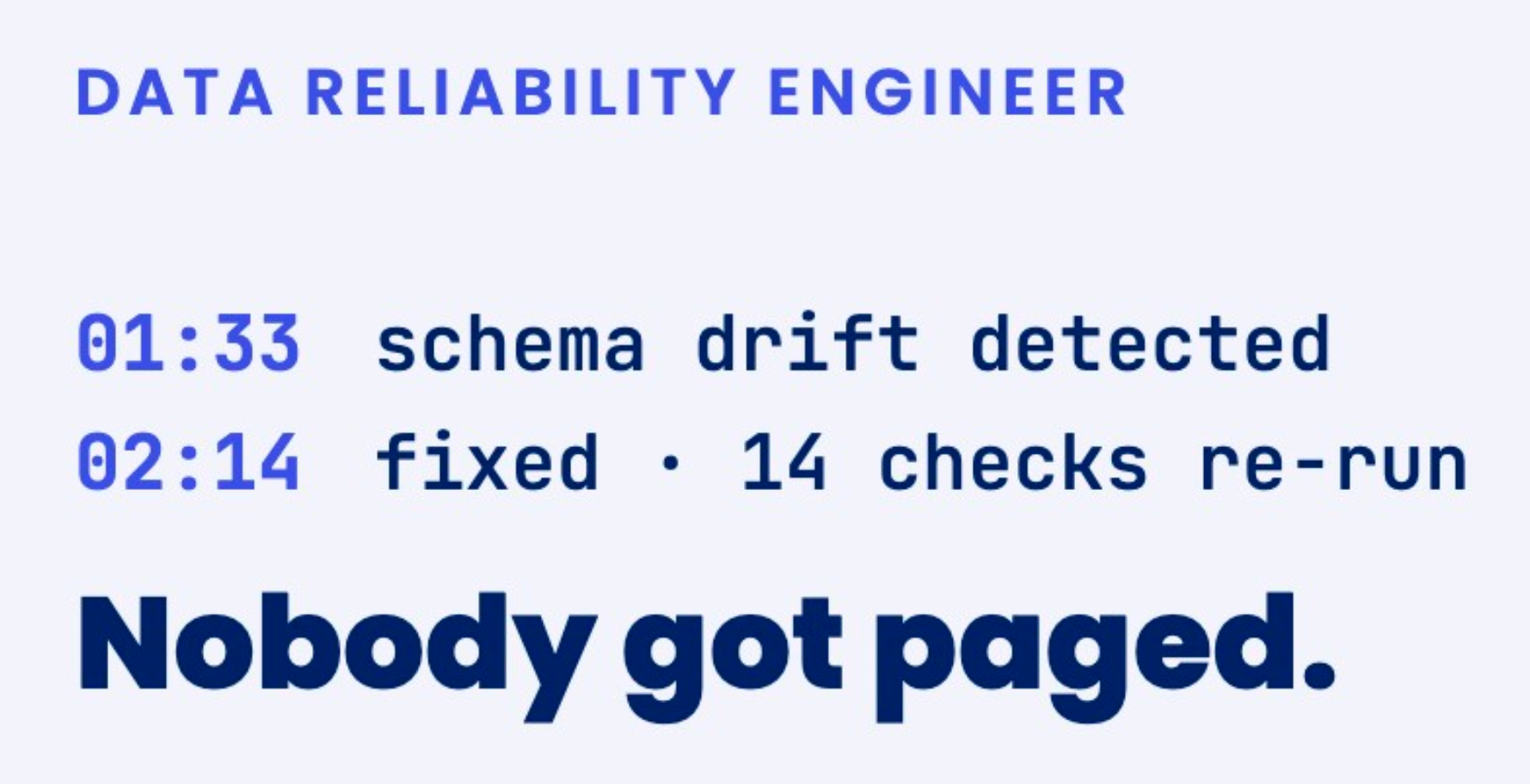
Pricing, billing, inventory and campaign pipelines get watched around the clock. When one breaks at 1:33 a.m., the agent traces the root cause, attaches the supporting data, and posts a recommended fix in Slack before the morning standup.
2. Shorten the path from question to decision
Trusted data means fewer reconciliation meetings and faster calls on pricing, spend and supply. At a $4B agency running WALT, report creation time and costs fell by more than 40%. Business users asked questions in plain English and got trusted answers in minutes, instead of waiting in an analyst's ticket queue for days.
3. Give engineering hours back to growth
Behind every AI strategy is a data engineer who hasn’t slept.
Today, a big slice of every data team's week goes to chasing broken pipelines and reconciling numbers. Hand that work to agents, and your team builds the next data product instead of babysitting the last one.
4. Make data safe to share and sell
As your agents start serving your partners' agents, reliability becomes part of what you sell. Data that holds up under machine-speed use is what lets you open new revenue lines without risking the ones you already have.
None of this sidelines your engineers. They’re now managers setting the standards, approving the fixes and owning the judgment calls, while the agents take the night shift.
Nothing new lands on your stack, either. The agents run inside your own cloud, on the Snowflake or Databricks estate you already own.
The real race runs from raw data to agent-ready data
Snowflake and Databricks will keep competing, and customers win every round of it. Still, the platform was never the finish line. The companies that win the next five years will be the ones that get from raw data to trusted, agent-ready data the fastest.
Pick your toolkit. Then start building.
At WALT, this is the problem we work on every day: an agentic data foundation that runs on the platforms you already trust. If you're mapping your own route from raw data to agent-ready data, I'd love to compare notes. Reach out for a demo.
Sources
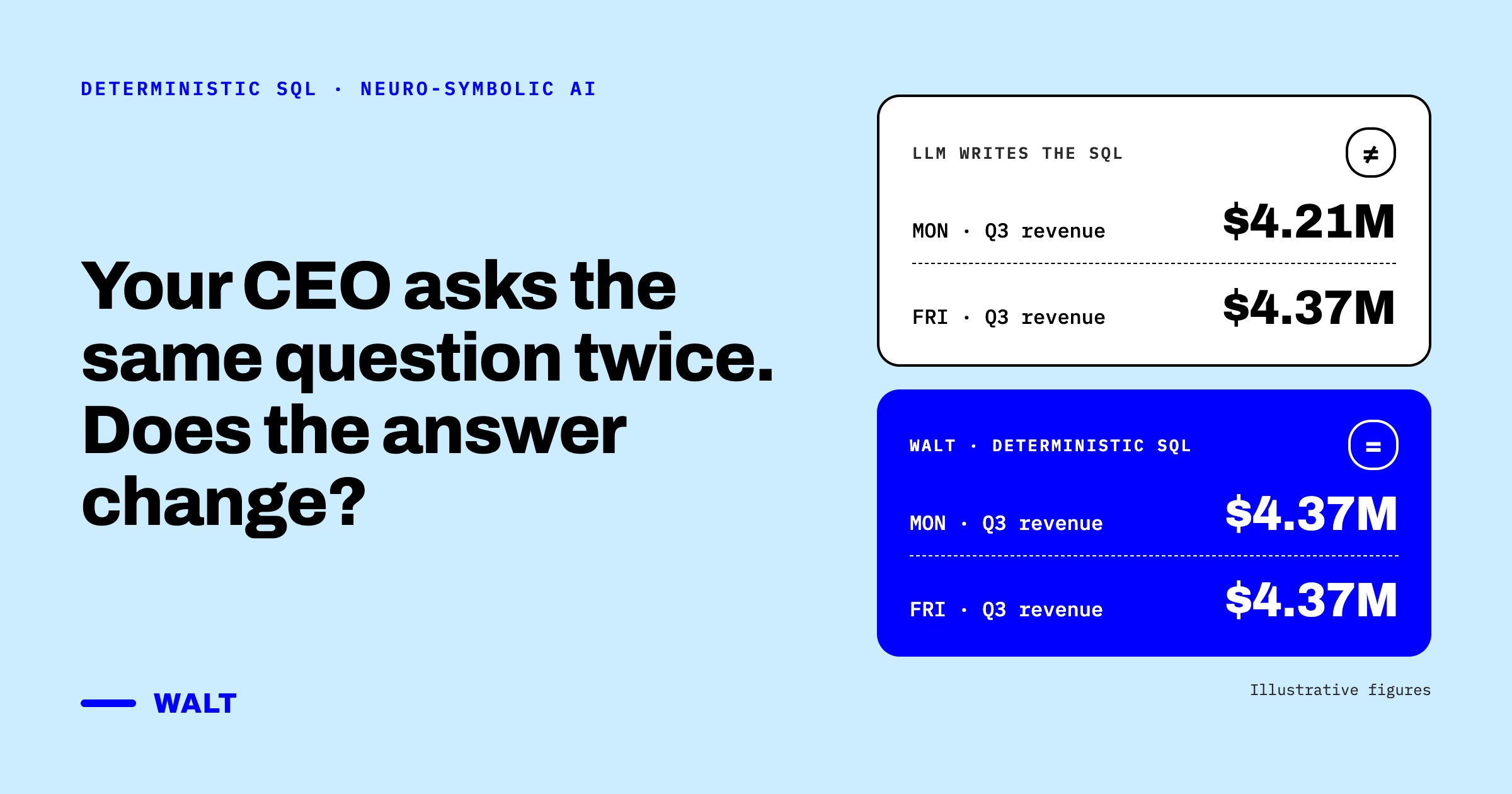


Meet WALT, your next Data Engineer that builds and runs your entire data platform


